13.Netty的HashedWheelTimer
- 时间轮是环形结构,任务新增和取消都是 O(1),只需一个线程驱动,适合大量短延迟定时任务
- HashedWheelTimer 用 Mpsc Queue 保证多线程添加任务的线程安全,Worker 线程懒启动
- 任务执行是串行的,耗时任务会阻塞后续调度,不适合执行时间长的任务
- Netty 时间轮有空推进问题,Kafka 用 DelayQueue + 层级时间轮解决
1. 时间轮原理
时间轮是一种环形结构,像钟表一样被分为多个 slot。每个 slot 代表一个时间段,内部用链表保存该时间段到期的所有任务。时间轮通过一个时针随着时间一个个 slot 转动,并执行 slot 中的所有到期任务。
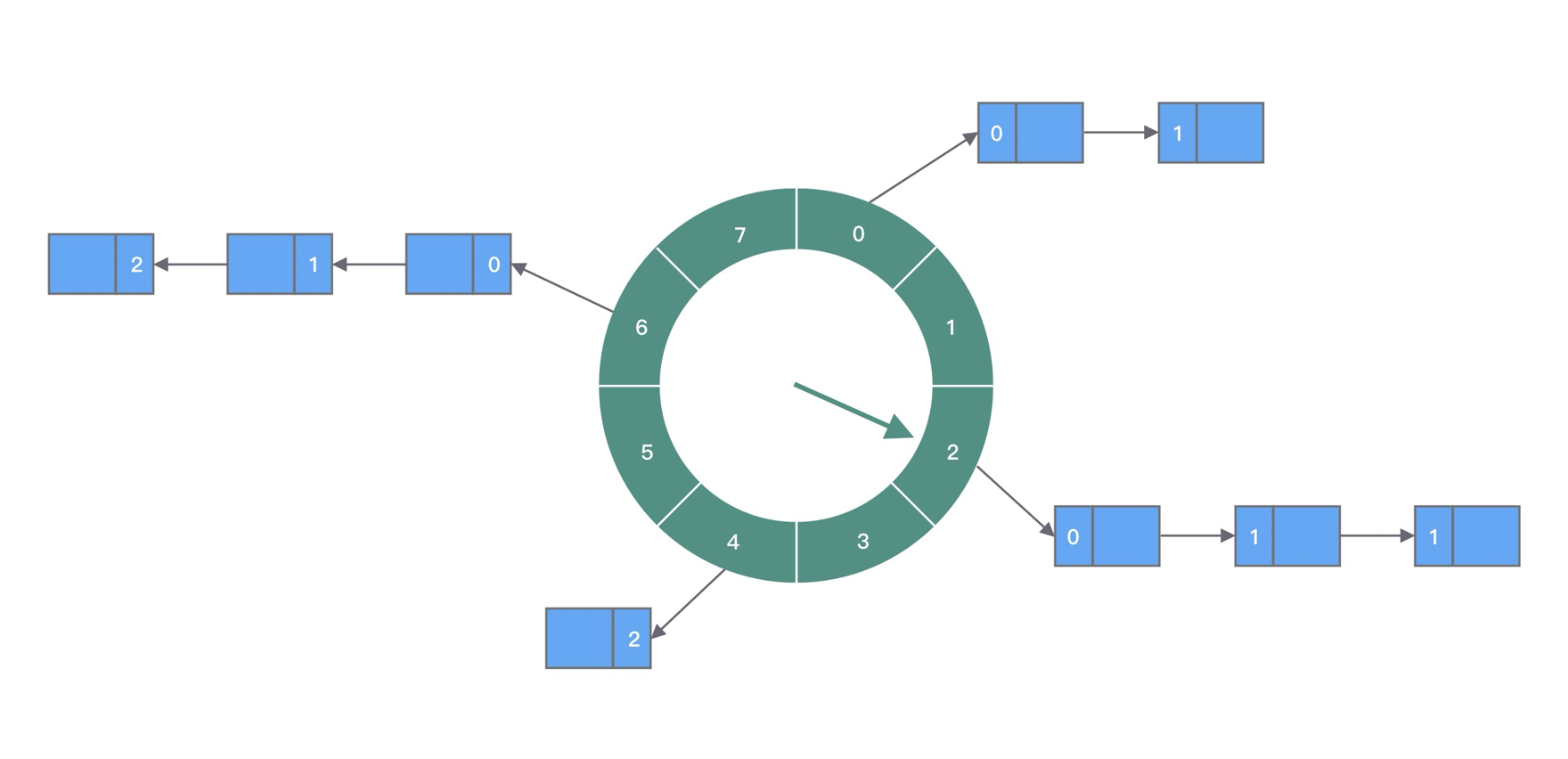
举个例子:时间轮被划分为 8 个 slot,每个 slot 代表 1s,当前时针指向 2。
- 调度一个 3s 后执行的任务 → 放入 slot
(2+3) % 8 = 5 - 调度一个 12s 后执行的任务 → 放入 slot
(2+12) % 8 = 6,但需要等时针走完整整一圈再多 4 格,所以任务里要记录remainingRounds = 1
多个任务落在同一个 slot 时,用拉链法解决冲突(和 Hash冲突的解决方案 一样)。任务量大时适当增加 slot 数量,可以减少每次 tick 时遍历的任务数。
时间轮最大的优势:任务新增和取消都是 O(1),只需一个线程驱动。相比 ScheduledThreadPoolExecutor 用堆实现(O(log n)),在任务量大的场景下性能优势明显。
| 方案 | 新增/取消复杂度 | 适用场景 |
|---|---|---|
| ScheduledThreadPoolExecutor | O(log n) | 任务量少,精度要求高 |
| HashedWheelTimer(时间轮) | O(1) | 任务量大,允许毫秒级误差 |
| Kafka 层级时间轮 | O(1) | 任务时间跨度大,需要精细控制 |
2. HashedWheelTimer 核心接口
HashedWheelTimer 实现了 io.netty.util.Timer 接口:
public interface Timer {
    Timeout newTimeout(TimerTask task, long delay, TimeUnit unit); // 创建任务
    Set<Timeout> stop();                                           // 停止未执行的任务
}

public interface TimerTask {
    void run(Timeout timeout) throws Exception;
}

public interface Timeout {
    Timer timer();
    TimerTask task();
    boolean isExpired();
    boolean isCancelled();
    boolean cancel(); // 取消任务
}
Timeout 持有 Timer 和 TimerTask 的引用,通过它可以取消任务。三者关系如下:
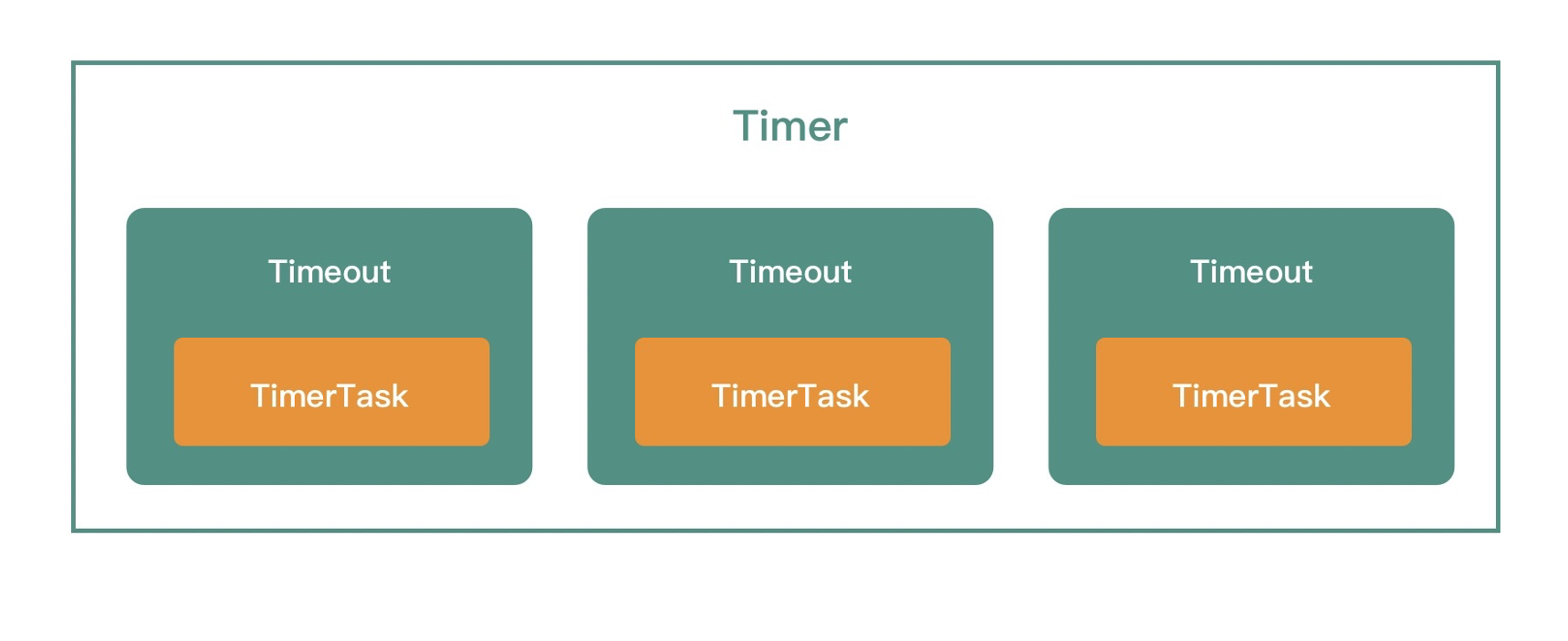
时间轮中的任务是串行执行的,一个任务耗时过长会阻塞后续任务调度,容易产生任务堆积。耗时操作要在任务里异步处理。
3. 构造函数与核心参数
public HashedWheelTimer(
        ThreadFactory threadFactory,
        long tickDuration, TimeUnit unit, int ticksPerWheel, boolean leakDetection,
        long maxPendingTimeouts) {

    wheel = createWheel(ticksPerWheel);  // 创建时间轮环形数组
    mask = wheel.length - 1;             // 用于快速取模的掩码(位运算代替 %)

    long duration = unit.toNanos(tickDuration);
    if (duration < MILLISECOND_NANOS) {
        logger.warn("Configured tickDuration {} smaller then {}, using 1ms.", tickDuration, MILLISECOND_NANOS);
        this.tickDuration = MILLISECOND_NANOS;
    } else {
        this.tickDuration = duration;
    }

    workerThread = threadFactory.newThread(worker);  // 创建工作线程(懒启动)
    leak = leakDetection || !workerThread.isDaemon() ? leakDetector.track(this) : null;
    this.maxPendingTimeouts = maxPendingTimeouts;

    // 实例数超过 64 会打印错误日志,HashedWheelTimer 不应该创建太多实例
    if (INSTANCE_COUNTER.incrementAndGet() > INSTANCE_COUNT_LIMIT &&
        WARNED_TOO_MANY_INSTANCES.compareAndSet(false, true)) {
        reportTooManyInstances();
    }
}
核心参数说明:
| 参数 | 说明 |
|---|---|
threadFactory |
线程工厂,但只创建一个工作线程 |
tickDuration |
时针每次 tick 的间隔时间 |
ticksPerWheel |
时间轮 slot 数量,默认 512,必须是 2 的幂 |
leakDetection |
是否开启内存泄漏检测 |
maxPendingTimeouts |
最大等待任务数,超出会抛 RejectedExecutionException |
slot 数组长度强制为 2 的幂,是为了用位运算 tick & mask 代替取模 tick % length,性能更好:
private static HashedWheelBucket[] createWheel(int ticksPerWheel) {
    ticksPerWheel = normalizeTicksPerWheel(ticksPerWheel); // 向上取最近的 2 的幂
    HashedWheelBucket[] wheel = new HashedWheelBucket[ticksPerWheel];
    for (int i = 0; i < wheel.length; i++) {
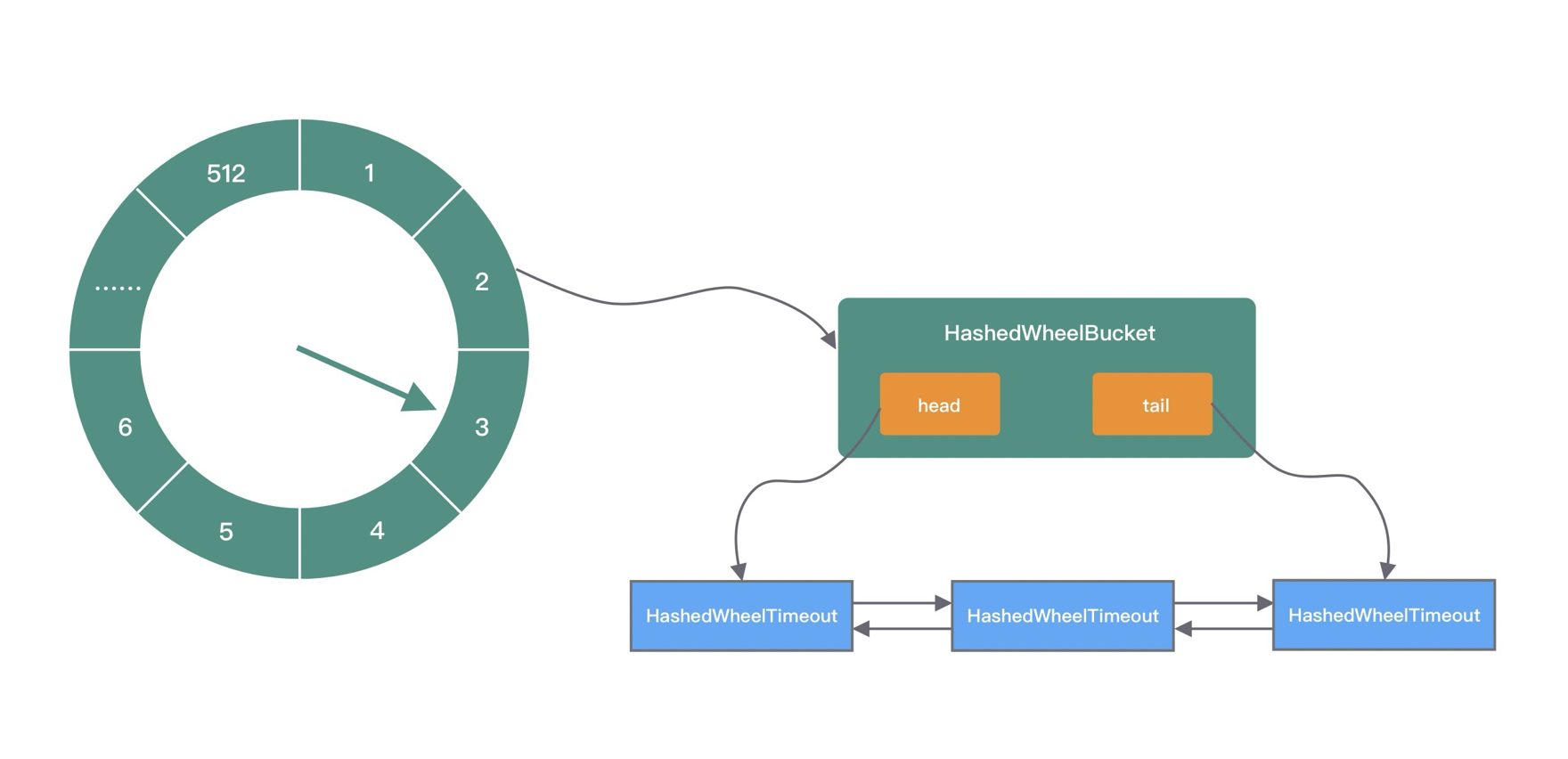
        wheel[i] = new HashedWheelBucket(); // 每个 slot 是一个双向链表
    }
    return wheel;
}

private static final class HashedWheelBucket {
    private HashedWheelTimeout head;
    private HashedWheelTimeout tail;
    // ...
}
整体数据结构:
4. 添加任务
public Timeout newTimeout(TimerTask task, long delay, TimeUnit unit) {
    // 超出最大等待任务数,直接拒绝
    long pendingTimeoutsCount = pendingTimeouts.incrementAndGet();
    if (maxPendingTimeouts > 0 && pendingTimeoutsCount > maxPendingTimeouts) {
        pendingTimeouts.decrementAndGet();
        throw new RejectedExecutionException("...");
    }

    start(); // 懒启动工作线程

    long deadline = System.nanoTime() + unit.toNanos(delay) - startTime;
    if (delay > 0 && deadline < 0) {
        deadline = Long.MAX_VALUE; // 防止溢出
    }

    HashedWheelTimeout timeout = new HashedWheelTimeout(this, task, deadline);
    timeouts.add(timeout); // 先放入 Mpsc Queue,不直接操作 slot
    return timeout;
}

// Mpsc Queue:多生产者单消费者,保证多线程添加任务的线程安全
private final Queue<HashedWheelTimeout> timeouts = PlatformDependent.newMpscQueue();
任务不是直接放进 slot,而是先进 Mpsc Queue,由 Worker 线程在每次 tick 时批量转移到对应 slot。这样设计是为了把多线程写入和单线程消费隔离开,避免加锁。
工作线程懒启动,用 CAS 保证只启动一次:
public void start() {
    switch (WORKER_STATE_UPDATER.get(this)) {
        case WORKER_STATE_INIT:
            if (WORKER_STATE_UPDATER.compareAndSet(this, WORKER_STATE_INIT, WORKER_STATE_STARTED)) {
                workerThread.start();
            }
            break;
        case WORKER_STATE_STARTED:
            break;
        case WORKER_STATE_SHUTDOWN:
            throw new IllegalStateException("cannot be started once stopped");
    }
    // 等待 startTime 初始化完成
    while (startTime == 0) {
        try {
            startTimeInitialized.await();
        } catch (InterruptedException ignore) {}
    }
}
5. Worker 工作线程
Worker 是时间轮的核心引擎,每次 tick 做五件事:
flowchart LR
    A[waitForNextTick\n睡到下次 tick] --> B[processCancelledTasks\n清理取消的任务]
    B --> C[transferTimeoutsToBuckets\n从 Mpsc Queue 转移任务到 slot]
    C --> D[expireTimeouts\n执行当前 slot 到期任务]
    D --> E[tick++]
private final class Worker implements Runnable {
@Override
public void run() {
startTime = System.nanoTime();
startTimeInitialized.countDown();
do {
final long deadline = waitForNextTick(); // 1. sleep 到下次 tick
if (deadline > 0) {
int idx = (int) (tick & mask); // 2. 计算当前 slot 下标
processCancelledTasks(); // 3. 清理取消的任务
HashedWheelBucket bucket = wheel[idx];
transferTimeoutsToBuckets(); // 4. Mpsc Queue → slot
bucket.expireTimeouts(deadline); // 5. 执行到期任务
tick++;
}
} while (WORKER_STATE_UPDATER.get(HashedWheelTimer.this) == WORKER_STATE_STARTED);
// 时间轮停止后,收集未执行的任务供 stop() 返回
for (HashedWheelBucket bucket : wheel) {
bucket.clearTimeouts(unprocessedTimeouts);
}
for (;;) {
HashedWheelTimeout timeout = timeouts.poll();
if (timeout == null) break;
if (!timeout.isCancelled()) unprocessedTimeouts.add(timeout);
}
processCancelledTasks();
}
}
transferTimeoutsToBuckets 每次最多处理 10 万个任务,防止阻塞 Worker:
private void transferTimeoutsToBuckets() {
    for (int i = 0; i < 100000; i++) {
        HashedWheelTimeout timeout = timeouts.poll();
        if (timeout == null) break;
        if (timeout.state() == HashedWheelTimeout.ST_CANCELLED) continue;

        long calculated = timeout.deadline / tickDuration;
        timeout.remainingRounds = (calculated - tick) / wheel.length; // 计算还需转几圈

        final long ticks = Math.max(calculated, tick);
        int stopIndex = (int) (ticks & mask);
        wheel[stopIndex].addTimeout(timeout);
    }
}
expireTimeouts 遍历当前 slot 的链表,remainingRounds <= 0 才真正执行:
public void expireTimeouts(long deadline) {
    HashedWheelTimeout timeout = head;
    while (timeout != null) {
        HashedWheelTimeout next = timeout.next;
        if (timeout.remainingRounds <= 0) {
            next = remove(timeout);
            if (timeout.deadline <= deadline) {
                timeout.expire(); // 串行执行 task.run()
            }
        } else if (timeout.isCancelled()) {
            next = remove(timeout);
        } else {
            timeout.remainingRounds--; // 还没到,圈数减 1
        }
        timeout = next;
    }
}
三个核心内部类的职责:
| 类 | 职责 |
|---|---|
HashedWheelTimeout |
任务封装,持有 deadline、remainingRounds 等属性 |
HashedWheelBucket |
对应一个 slot,内部是双向链表 |
Worker |
核心引擎,驱动时针转动并执行到期任务 |
6. Kafka 的时间轮优化
Netty 的时间轮有两个问题:
问题一:空推进
时针按固定间隔 tickDuration 推进,长时间没有到期任务时,Worker 线程仍然在空转,浪费 CPU。
问题二:时间跨度大
比如 A 任务 1s 后执行,B 任务 6 小时后执行,B 任务要等时针转很多圈,期间大量空推进。
6.1 DelayQueue 解决空推进
Kafka 用 JDK 的 DelayQueue 来驱动时间轮推进,而不是固定 sleep。DelayQueue 保存每个 Bucket,按到期时间排序,最近到期的放队头。没有任务到期时,读取线程会一直阻塞,彻底消除空推进。
DelayQueue 插入删除是 O(log n),但 Bucket 数量远少于任务数量,这点开销完全可以接受。
6.2 层级时间轮解决跨度大
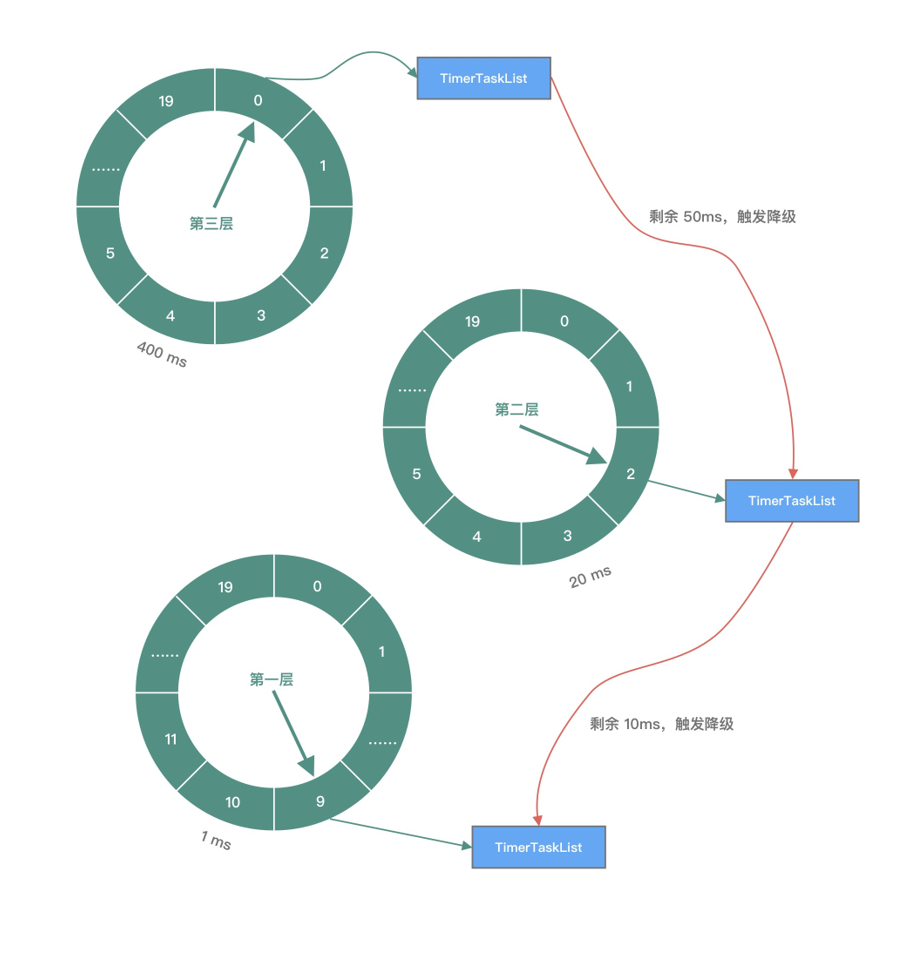
Kafka 引入多层时间轮,每层的 tickDuration 不同,精度逐层降低:
- 第一层:1ms × 20 格,覆盖 20ms
- 第二层:20ms × 20 格,覆盖 400ms
- 第三层:400ms × 20 格,覆盖 8000ms
比如一个 450ms 后执行的任务,先放在第三层第一格。时针转到该格时,任务还剩 50ms,触发降级:重新提交到时间轮,这次落在第二层第三格(40ms 粒度)。再过 40ms 再次降级,落入第一层,最后精确执行。
层级时间轮的好处是时间粒度可以精细控制,能应对跨度从毫秒到小时的各种定时任务场景。